The program section curated by Lina Dinkla (DOK Leipzig) and Katharina Franck, dedicated to working conditions in 21st-century Europe, will center on people whose professional engagement fluently merges with activist action this year.
Working Worlds - Vocation: Change!
Lina Dinkla (DOK Leipzig) and Katharina Franck
Working for a better world: That’s how one could sum up the Working Worlds in 2024. The emphasis this year is on professional fields that fluently merge with activist action – sometimes more and sometimes less by choice or intention. Four documentaries centering on people devoted to occupations that involve far more than earning money, career, or personal fulfillment. In a world that seems to have gone off the rails in a myriad of places at the same time, there are encouraging persons who go where it hurts, who also give up a piece of their private lives with their jobs. Who are passionate about what they do and who, not least, are faced with danger at doing what they do.
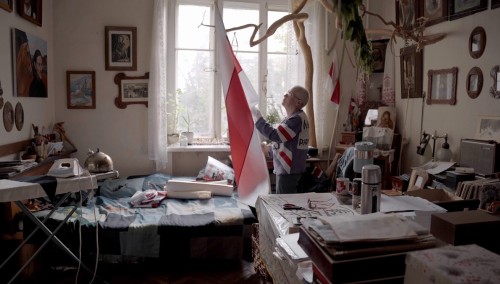
WER, WENN NICHT WIR? DER KAMPF FÜR DEMOKRATIE IN BELARUS / WHO IF NOT US? THE FIGHT FOR DEMOCRACY IN BELARUS may constitute the starting point in this series because here it is in fact female human rights activists in Belarus whose dangerous work the film accompanies for three years. Being the director of the Minsk-based human rights film festival “Watch Docs” or working for the human rights center “Wiasja”, any day could be the last day in freedom and in a cynical turn, despite the Russian attacks, even neighboring Ukraine is safer than one’s own homeland.
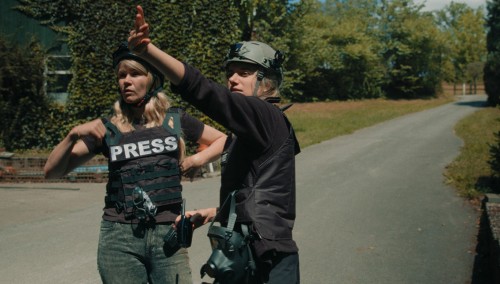
What is also interesting here is that the director of the film, Juliane Tutein, is also one of the protagonists of the film WAS BLEIBT – JOURNALISTINNEN IN KRISENREGIONEN / WHAT REMAINS – JOURNALISTS IN CRISIS AREAS. The two entries complement each other to form a double portrait. The latter also focuses on three women, who in this case are reporters and journalists in crisis areas that include Afghanistan, the Congo, and the aforementioned Belarus and Ukraine. As observers, journalists are attributed a certain amount of neutrality, but in the conversations, it quickly becomes clear that as a woman in patriarchally shaped regions and countries with dictatorial regimes, there is no way at all not to take an activist point of view.
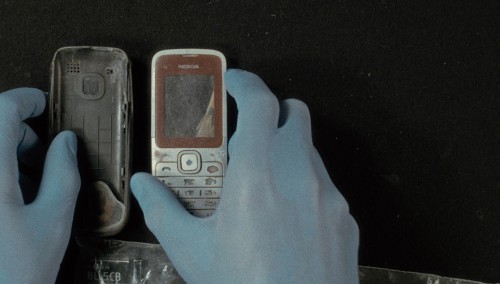
It is also in the case of Cristina, the protagonist of SCONOSCIUTI PURI / PURE UNKNOWN, that an external aspect of her work gets her to fight for change. Her autopsy table in forensic medicine is where deceased people with an unknown identity are brought. Her day-to-day work changes because of the many people who die while fleeing across the Mediterranean Sea. Increasingly often, there is a lack of funds to identify them. Cristina looks into this legal void and tries to find out who is responsible for covering the cost of the confirmation of refugee identities, not least to provide clarity for the relatives.
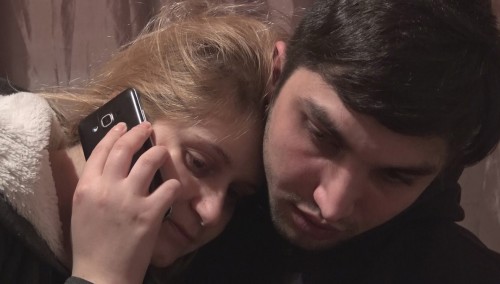
BEAUTY AND THE LAWYER takes us to Armenia, a country with an extremely queer-hostile society. Garik lives there as a drag performer and sex worker, their wife Hasmik is an LGBTIQA+ rights lawyer. They simply wish to live a normal life with their little child, but that in and of itself is already pure activism. (Lina Dinkla, Katharina Franck)
With the kind support of